Information about school health services can be unclear, especially to those who don’t utilize them. Many have vague assumptions about what schools like Skyline provide regarding student wellness. It is common for many schools within a district to be covered and managed by one medical professional, like a nurse; however, more adults are trained in the building than most might think.
Every year, all staff of the Granite School District are required to complete what is known as “Vector Training,” according to Assistant Principal Chris Baker. This is an online program that contributes to medical training and privacy awareness of workers in their field. In Granite’s case, every staff member must complete about nine hours worth of virtual training with some topics such as “bloodborne exposure, emergency protocols, medicaid training, and legal liability.” Additionally, everyone is offered the opportunity to participate in annual first-responder training, where individuals are taught how to deal with medical emergencies hands-on. Although not everyone takes advantage of this opportunity, many teachers and administrators are eager to learn for the sake of their students.
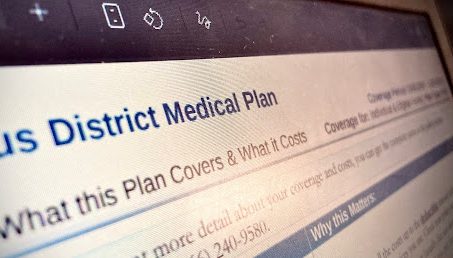
Baker states, “I truly believe that every teacher cares so much about their kids so they want to learn [and] there’s never any pushback as far as I’ve seen.” Teachers not only have a responsibility to provide education, but also to ensure the safety and care of their students. Baker continues by saying that “they have to be able to at least see signs” because of students with medical plans. Teachers are meant to look over medical plans at least once at the beginning of the school year and again at the start of the second semester in case of any student health or class changes.
As stated previously, legal liability is a part of annual staff training because if a teacher deals with a student’s medical background, they must make sure they are following legal procedures. One of the biggest laws in education is the Family Education Rights and Privacy Act (FERPA), which protects students against any leak of personal information such as transcripts, grades, education funds, medical records, etc, without consent.
To get a different perspective, Assistant Athletic Director Rob Davis was asked about the training that he and coaches must go through in comparison to other teachers. He says, “Honestly, it’s probably pretty similar. The only thing that’s a little bit different is the way we get our first aid and CPR certification; it does need to be face-to-face.”
While teachers have the choice to attend first-hand training, Davis says, “Within the last couple of years, the state has now required coaches to do it in person.” As injuries are more prone to happen in a sports setting compared to a classroom, this real-life preparation is vital. Davis also emphasizes that, as a coach, they have a responsibility to be “aware of the physical demands and the physical conditions of [their] sport specifically” so that they can be prepared for any situation their athlete might be in, “given […] their own personal medical history.”
The physical well-being of students is not only important to ensure their health but also to maintain a consistent environment for learning. Davis says Skyline can do this by “making sure that they’re not isolated but can continue to be a part of the class and be as normal as everyone else.” In continuation, he added, “It’s a part of our job to […] make sure that you guys are safe and your experience is what it should be.”