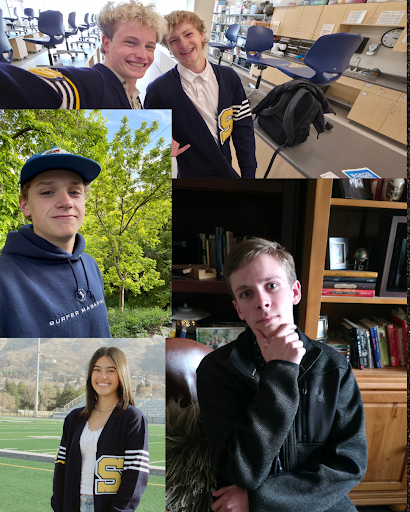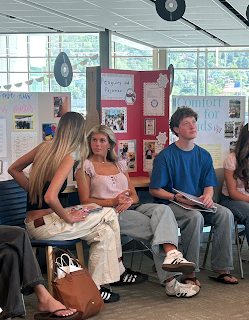
On March 26—often known as Ivy Day—countless Skyline students opened decision letters from top American universities. Multiple students were admitted to Ivies and Ivy adjacents, with acceptances ranging from Brown University to Stanford University. Many of these students are eager to help rising juniors succeed in the college application process next year and hope to help demystify it.
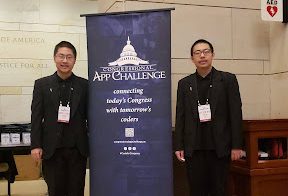
Zibo Wang is a Senior at Skyline and the Executive Vice President of Utah FBLA (Future Business Leaders of America), where he leads over 3,000 members. He was recently admitted to Cornell, UCLA, John Hopkins, Stanford, and the Wharton School of the University of Pennsylvania. He has also been offered a full ride scholarship at Rice University. Wang is a leader at the Silicon Valley Youth Entrepreneurship Program: a student-run nonprofit centered around entrepreneurial education for youth. As part of the team, he’s helped raise roughly $275,000 and won multiple business awards on the national stage. In his free time, he tutors other students and plays piano competitively, which includes a performance at Carnegie Hall in New York. In the future, Wang is interested in majoring in business management or economics. Currently, he’s committed to Stanford.
In regards to his greatest achievement, Wang says he’s proudest of his FBLA journey. “I remember freshman year, I didn’t qualify for NLC [National Leadership Conference]. I didn’t even place at Regions. And then I just continued to work on myself throughout these four years. And now, I went from getting […] last place in my first competition to getting first in the nation at Anaheim last year.” Wang also mentioned his contributions to the development of a free music app that now has over 20,000 learners. One of his biggest passions is using music to break socioeconomic barriers, explaining that, “I was part of this organization called the Mundi Project, and they focused on providing music to lower income areas.”
Wang’s top tip to applying to prestigious universities is to remember to prioritize your health as well. He said, “I have a lot of advice. I think the first one is balance. Balance between your social life, balance between your academics, your extracurriculars, [and] staying healthy, […] not just physically, but also staying healthy mentally.” He also mentioned it’s vital to find a supportive friend group during the application process. “I think having a very close friend group that supports you every step, and having a friend group that doesn’t actively try to sabotage you, that’s really important,” he explained.
For him, one of the most difficult parts of the application process was time management. He said, “At the beginning of the year, I had some family issues, and that couldn’t have happened at a worse time.” For IB students particularly, he advises, “A lot of your deadlines, especially with the extended essay and your TOK essay, are due at the beginning of the year as well. And you’re going to have to deal with that, and you’re also going to have to deal with all your college apps. So make sure you manage your time well [and] get started as soon as possible.”
In recent years, American universities have tended towards reviewing applications holistically, rather than just focusing on academics. From this trend have come the terms “spiked” and “well-rounded,” used to describe applicants with different levels of variance in their extracurriculars. “I like to think of it as […] a Thanksgiving dinner,” Wang said. “So obviously, in the middle, […] the most attention pulling thing is the turkey. And you should have something in your application that’s similar to that. […] And then you have all these side dishes that help complement that.”
Jarius McCarthy is a captain on Skyline’s Speech and Debate Team, a classically trained musician, and an SBO at Skyline. He was recently admitted to Brown and the University of Pennsylvania, where he is interested in studying philosophy. In terms of his career, he’s looking into psychiatry and clinical psychology. When asked about his proudest accomplishment, McCarthy mentioned a debate critique file he submitted to many of the universities he applied to. “I offered this 135 page plus critique file on post-modernism, [which] I started freshman year. […] I think it helped me to stand out because it showed my intellectual vitality,” he explained. “I think if you are going to do any research or something, I’d say what matters more is if you’re genuinely interested in the topic.”
McCarthy advised, “Don’t do anything just for college apps. Have some genuine reason behind it, or else you’re going to get burnt out.”
One of McCarthy’s biggest passions is the human condition, which he explored through three lenses in his application—philosophy, psychology, and music. He said, “I think [music] is universal in a way that other forms of art, while completely valid, can’t convey as well from my personal understanding. […] You can have people, who don’t speak the same language, play music from a composer 300 years ago, who also speaks neither of their languages, but somehow are able to create something beautiful and something harmonious. And I think that’s extremely powerful.”
One thing that McCarthy wants students to keep in mind is that they can be admitted regardless of their socioeconomic status. “I feel like schools will always evaluate your scores in context. If you’re from an underserved community or you aren’t financially well off, if you get like a 32 [on the ACT], that’s actually really good because it shows that you’re still able to perform at high levels, even without those resources,” he explained.
When asked about the most difficult part, McCarthy found the personal statement to be the hardest portion of college applications. He said, “Writing personal statements, penning a story that is unique to you, demonstrates your thinking style, is vulnerable, is interesting, and is almost artistic in a way, it’s really really hard. Some people describe the college essay as its own genre of literary work, and I would tend to agree because it’s not like a cover letter where you can display all your activities, […] and it’s not a resume either.” Overall, McCarthy thinks the best approach is to stay true to yourself during the writing process. He stated, “I would say tell the story only you can tell.”
Another mysterious part of the process is recommendation letters. “Pick teachers you know very well,” McCarthy said. “You don’t want to be too pushy with your recommenders. Don’t tell them word for word what you want them to say. But give them anecdotes, give them ideas, tell them what type of person you’re trying to convey to the school.”
Ultimately, McCarthy counseled, “It’s super easy to fall down comparison traps. […] So just protect your mental health, protect your sanity. You’ll be fine.”